Stranger in a Splendid Land
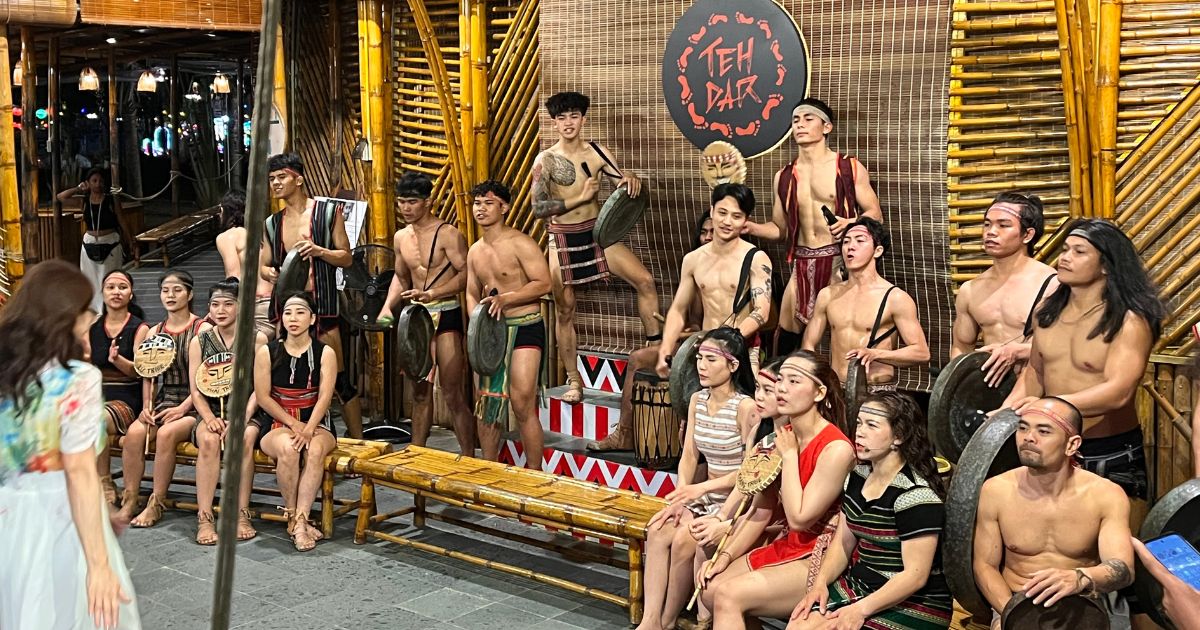
We immigrants, we foreigners, we digital nomads and wealthy tourists and entitled expats - too often we’re loud, intrusive, whatever is the opposite of subtle. Our unnecessarily big bodies take up a lot of space. Our voluminous chatter in Babel tongues clogs the airways. Our tentative driving clogs up intersections. We do not blend.
And we expect a lot. We expect karaoke to end when we decide it’s bedtime, and coffee shops with servers who understand our special requests in English. We congregate in bars that play music from our high school prom. We grumble when restaurants close on the Tet holiday so their workers can be with their families. We want Vietnam be exotic and cheap and unlimited while still operating by a Western playbook.
I’m not saying we all do all these things, of course. But after a full month of full immersion into the world of pickleball and ice plunges with sturdy Scandinavians, I can’t pretend to not be part of this invading force. Just by being here I am part of this plague of foreign influence that creeps up every alley and seeps into burger menus and MoonMilk grocery shelves. I and We make a bold indent into the very culture we came to observe and appreciate.
Or is that really why we came here? Hoi An is one of many digital nomad outposts where we meet people we met before, and do the same things we did before, in Chiang Mai or Bolivia or Bulgaria. We set up miniature replicas that are independent of place, and move on when the place doesn’t accommodate us well enough. Hoi An serves its purpose for us so long as it remains cheap and safe and hospitable; when the heat or the burning rice fields or crowds get too much we can easily pick up and set up our circus in some other field. If that’s the case, are we really in Vietnam, or just renting it like a theatre for our own play and our own audience?
But Not Me, Right?
We like to call ourselves “expats.” Like it differentiates us from the “immigrants” who are being scapegoated for the failings of the US and many European countries. Like we’re a privileged class not bound to the expectations and rules we impose on newcomers to our countries. A class not even bound by the norms we would follow back home. If we could just look in the mirror and see ourselves as immigrants - guests in someone else’s home, ambassadors for our countries’ image, bound to an even higher-than-normal code like dinner at Grandma’s - maybe we’d behave a little better.
I still cringe at every immigrant who walks barechested downtown, oblivious to the sharply-dressed Vietnamese people in their way. I talk back when talk goes to how “they” do things wrong or backwards, and gently suggest that perhaps it’s us who don’t understand the right way to make a left turn in Vietnam (answer: pull onto the opposite shoulder, ride against traffic up to the corner - it works here, but please don’t try this at home!) I take the hand of a scared Aussie who admits she’s been standing at a corner for 20 minutes not knowing how to cross.
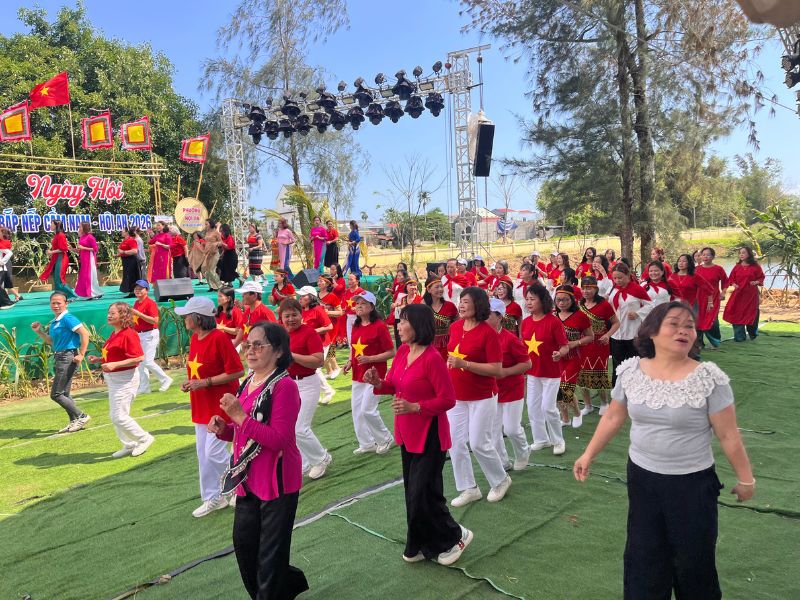
Then just when I think I’m better than “those” foreigners (I go to the very local Sweet Corn Festival, and Sarah’s taking sewing lessons from a local seamstress, after all!), my own privilege and fragility rise up to mock my hypocrisy. I complain that kombucha is too sweet here. Feel inconvenienced that I can’t call my kids at midnight (gotta love the 12-hour time difference) from the lounge because our lovely security guard sleeps there on a cot each night. And upon discovering that our visa expires three days before our flight out, I’m put out that the Vietnamese government is so strict about these rules and maybe I’ll just show up at the airport three days overdue and let them deal with it.

Legacy of War
51 years after the end of the “American War,” (no-one in this central part of Vietnam is under any illusion that the US were here as a liberating force) and 72 years after the end of French colonial rule, I don’t detect lasting resentment and residue in everyday life. It would take a very long time to become even partly integrated into true local life, but I believe that’s more of a cultural divide than animosity.
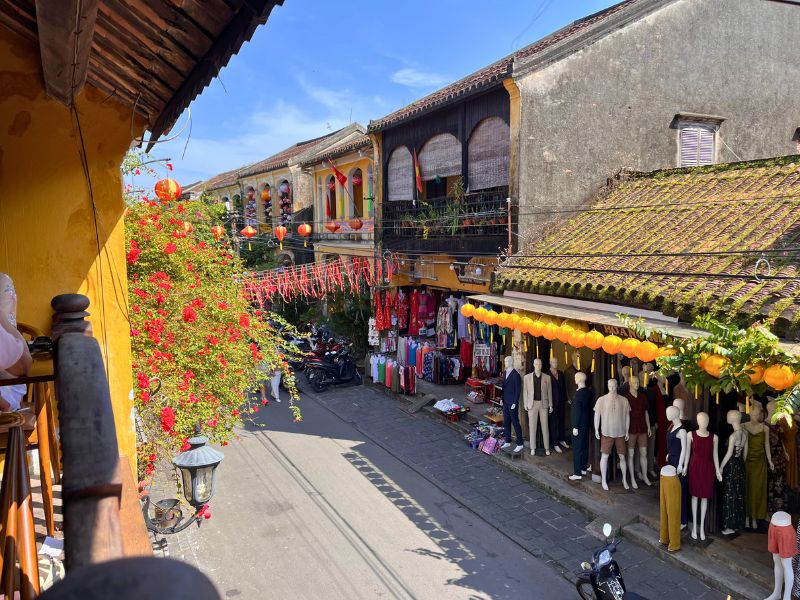
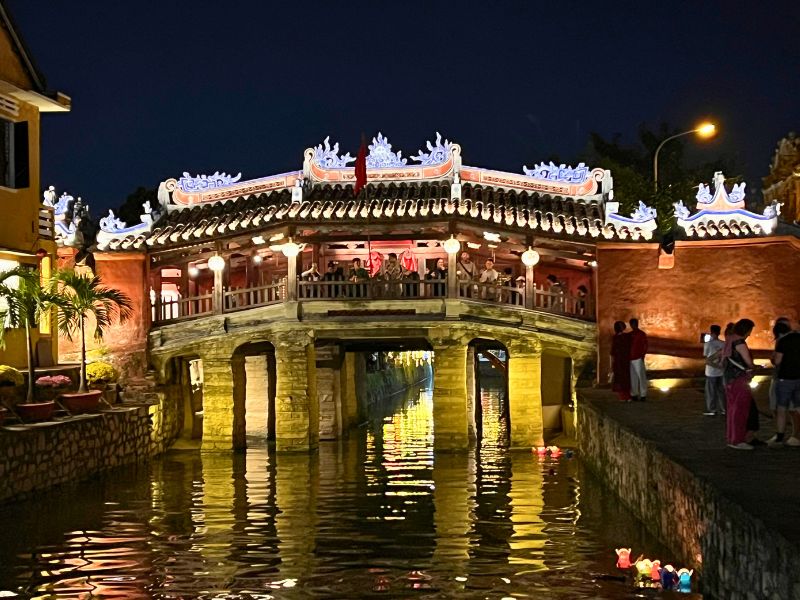
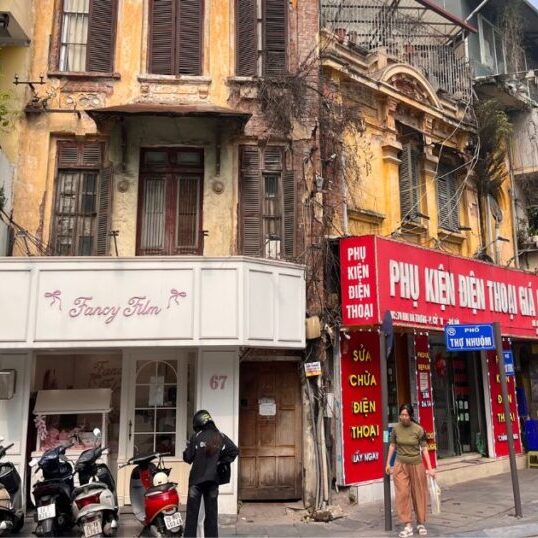
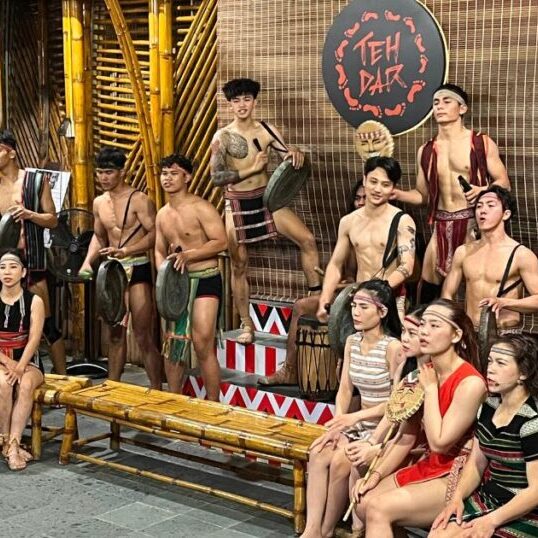
Vietnamese people are genuinely welcoming to visitors and the impact we’ve had in rebuilding the economy in Hoi An. Tailors do a brisk business. Farmers sit all day at the roadside inviting tourists to get their photos taken on a water buffalo. We attend a fabulous “cultural show” with Cirque de Soleil-level acrobatics performed on an impressive variety of bamboo apparati. Old town’s narrow streets and yellow French-colonial buildings are shoulder-to-shoulder day and night with tour groups in matching plastic raincoats, crossing the historic Japanese Bridge (from when Japan was the major trading partner here) to the floating lantern river.
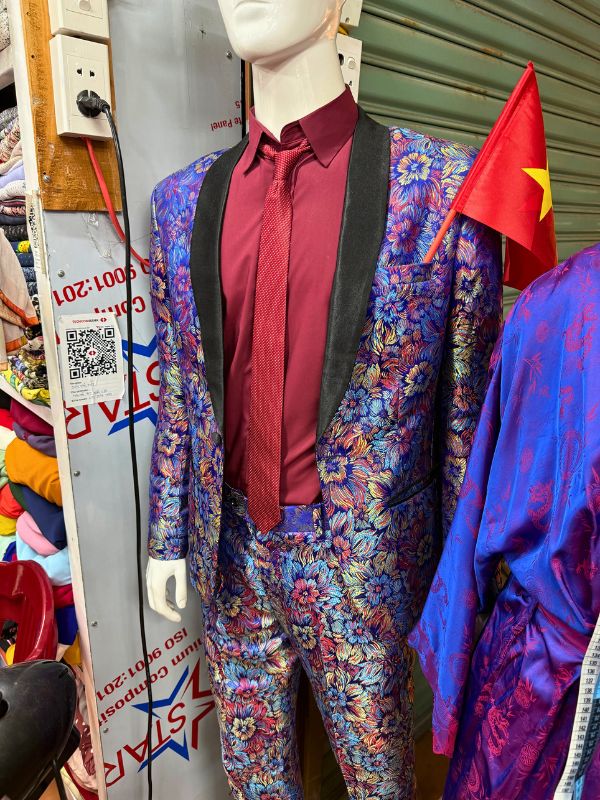
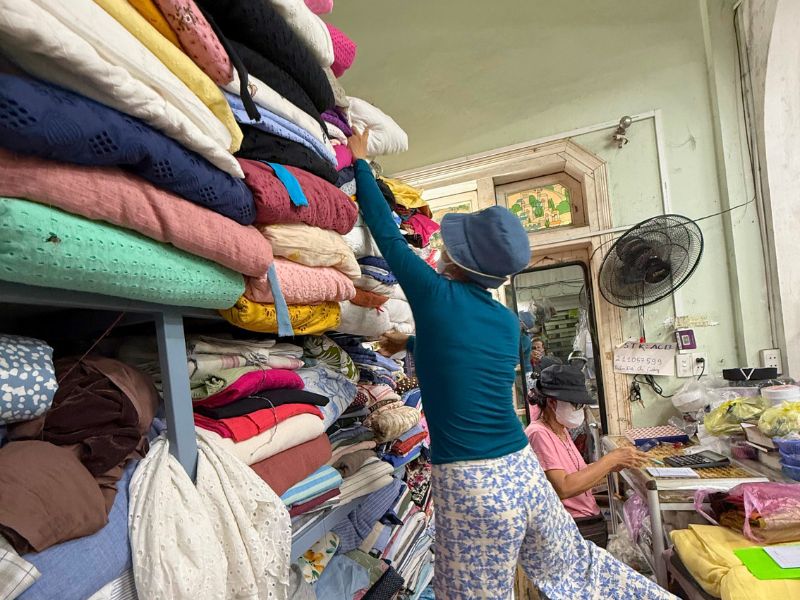

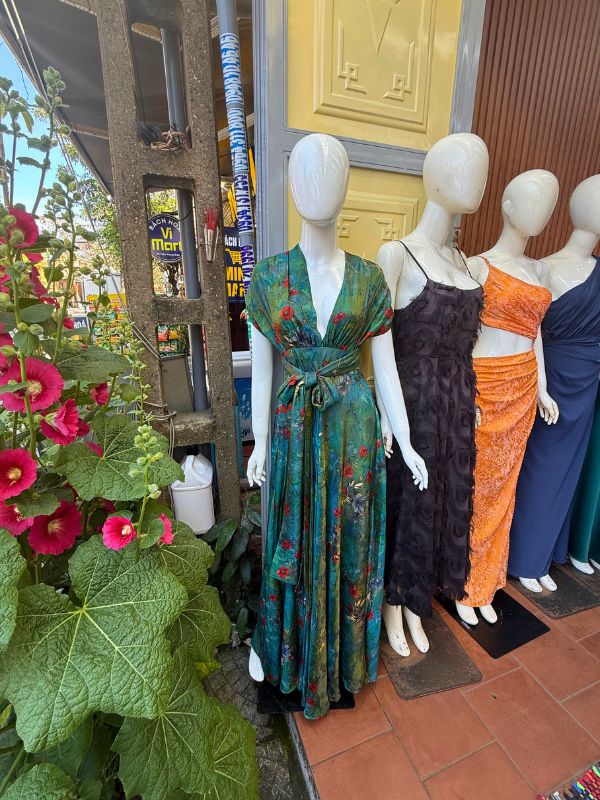
Most countries I’ve experienced clearly carry on some colonial remnants. We enjoy Turkish (Ottoman Empire) baklava in Albania. My cook in rural Tanzania wears crisp white British shorts and shirts for seasonal dance festivals. Congo’s government and legal systems are still mired in the bureaucratic, paper-heavy systems used by Belgian colonial administrators. But Vietnam appears to have shed the influence of French colonialism. English is the language of menus and tour operators. Nary a chocolate eclair to be found. The odd basket boats that tourists flock to and fishermen still actually use are one of the few, ironic visible leftovers from that era when the French put such a high tax on fishing boats that they resorted to braving the ocean in giant baskets.
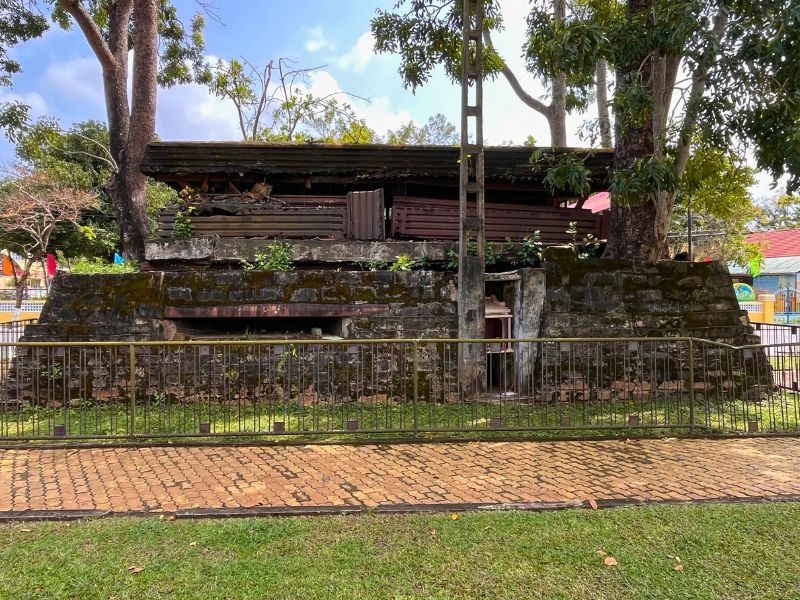
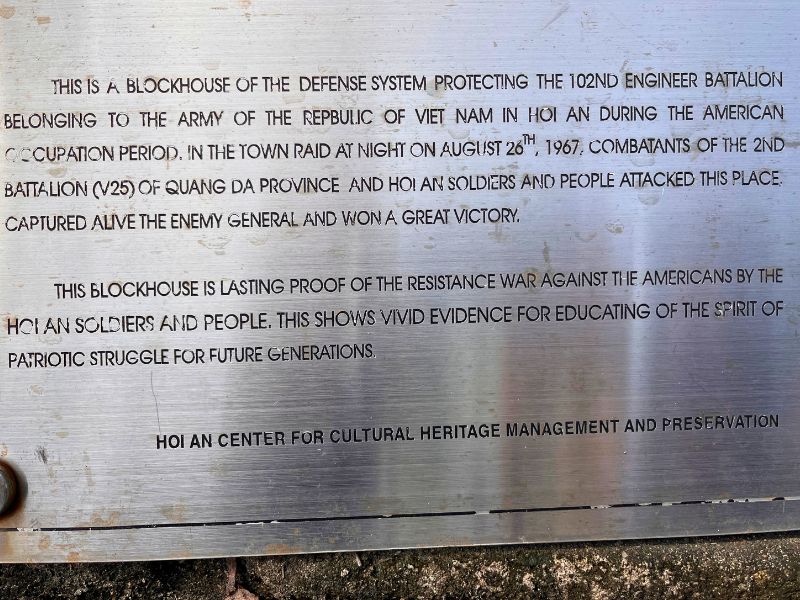
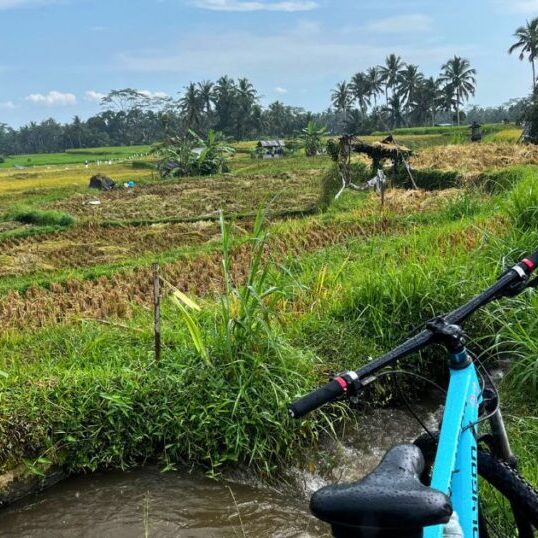
Then there are the quiet reminders. We discover a quiet backstreet on the edge of the ricefields - a peaceful oasis just off the bustling main road - then find a plaque commemorating the brave victory of wiping out the (American) enemy and capturing all their weapons that happened right here. Right here on this path that emanates such Peace and harmony, how could this have happened in my lifetime?
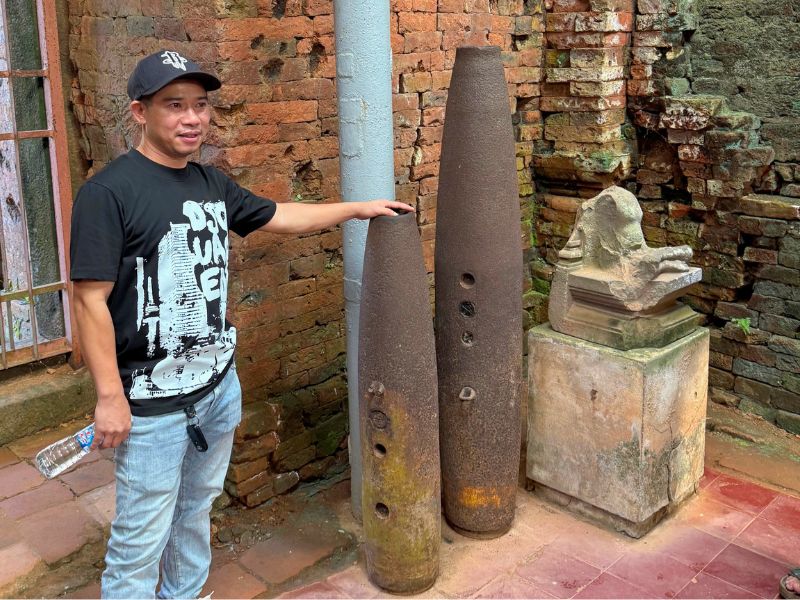
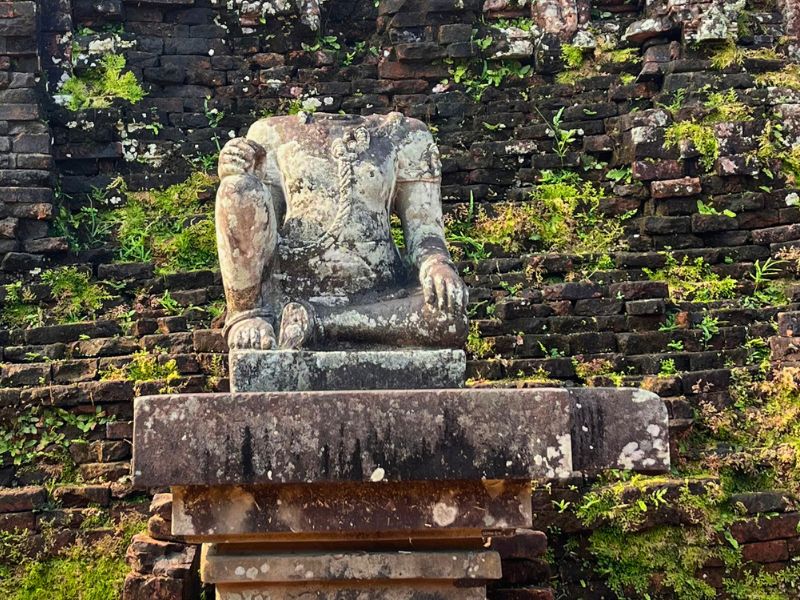
In a rebuilt temple in the remote My Son Hindu temple complex, our guide shows us two of the American shells that reduced 90% of this holy place to rubble. Then he takes us to a headless statue of Shiva - the head still living in the Louvre and the French still claiming it belongs to them. It reminds me of the surprising number of male friends who have commented on how beautiful the women of Vietnam are - like the country is a giant discount superstore where people and culture are commodities neatly arranged for our pleasure.
How Do the Vietnamese View Us?
This post has been difficult to write, so I asked an expat friend to review it for me. He replied, “I do not find the writing insensitive; however, I do find it incomplete. The pain of not being immersed with the locals during an immersion, rather than floating like a water hyacinth, comes through in the piece. But the piece's structure points to the same problem: it focuses primarily on the immigrants and gives insufficient attention to the layers of emotion of the locals due to the sudden influx of immigrants in Hoi An.”
Truth be told, I can’t really know how we are viewed by our Vietnamese hosts. The locals I do get to interact with are those who are paid to do so (language tutor, cleaning lady…) and/or have chosen to align themselves with immigrants. The group of men in undershirts sitting on low plastic chairs at a street-corner bar, smoking and laughing, are impenetrable for me. As friendly as the women in the market are, I can have no idea what they go home to or what they laugh about to the women in the next stall after I walk away with my prized starfruit and avocado. And in such a polite and gracious society, eliciting an honest appraisal with any degree of criticism or hurt would take years of trust-building.
Perhaps more years is the answer. The co-working community of digital nomads that has occluded my vision is usually a stepping stone for those who end up staying longer. They move on to a more dispersed social circle (and WhatsApp community) of long-term immigrants. They marry, start a business, volunteer, and finally learn the multiple ways to pronounce the letter “a”. They’ll always be strangers in this splendid land, but hopefully also become genuine members of the community and understand these issues at a deeper level than I can.
I would ask these wise naturalized people, but they aren’t in the circles I’m spinning in. The long-termers I meet still rave about the Bangers and Beans breakfast at the British beach pub, and still play segregated pickleball (evidently Vietnamese love pickleball, but have their own play times). Whether this is a lack of initiative on their part, or a rejection by the Vietnamese people (which would go towards answering my question about how they view us), I do not know.
No Easy Answer
I’m sitting at the Roving Chillhouse - a sprawling expanse of thatched-hut coffee tables in the middle of the rice fields - for an expat Mental Health sharing session. A beautiful Italian man shares that this is the first time in his 12 years of digital nomading that he has become involved in this vibrant expat community, and also the first time he has failed to make inroads into the local community. “These have to be connected,” he reflects.
I know he’s right. And maybe I’d feel better about my personal place in this beautiful space if I invested more energy into Vietnam and less into my fellow nomads. As much as I have truly enjoyed the experience, they are a safety bubble we all gather inside and tromp around like the giant destructive Michelin Man in Ghost Busters. But to a certain extent, in the eyes of the people to whom this country belongs, I would still just be another foreigner in their land, and still part of the wave of foreigners washing up on the shore churning up the rocks and sand. I may not act like “them”, but I am one of them, and it makes me uncomfortable.
Sorry for the abrupt ending, but I don’t have any neat conclusion. It’s messy, this desire to see the world and constantly enter into other people’s homes without muddying their floors too much. To somehow be culturally appropriate, and to give more than I receive. I hope that acknowledging my complicity in our collective foreigner impact is one step in understanding and finding my way through.

Subscribe now to get an email notification when a new post is published.
(Be sure to check your inbox to confirm your subscription.)
10 Comments
Leave a Comment








Currently in...
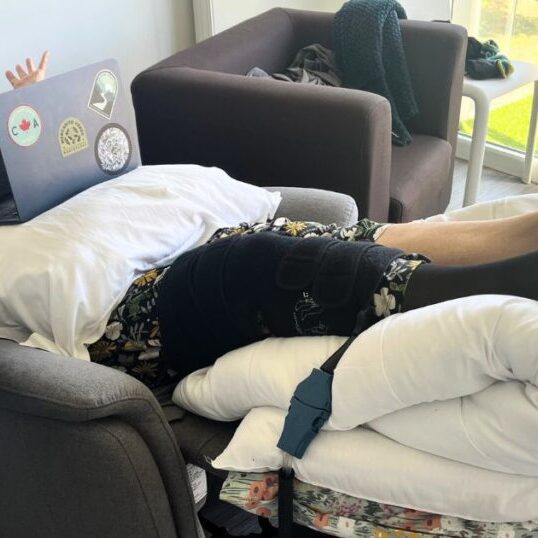
Montevideo, Uruguay, for Sept-Oct, recovering from knee-replacement and a busy busy summer
Heading to...
Chile, Easter Island, Carnival!, Monteverde. Please share any sites, people or ideas by email.
Great post. I may have to reread that to absorb it all. I’ve thought about these things a lot as we travel around Asia, Africa, and even Europe, interacting with locals only in restaurants, hotels, safaris, can drivers, etc., but also living abroad for 13 years knowing I was an immigrant and coming back to the United States where I can deeply relate to those who come from elsewhere and are trying to integrate. Recently we hosted a family from French Polynesia who was doing a round the world trip for two years. I did not know them, I just wanted to pay it forward after having been generously accepted as observers of a big cultural festival on their native islands of the Marquesas islands a few years before. I think being a gracious guest, and then paying it forward where we can by getting involved back home simply makes the world a better place. Thanks for another thoughtful post.
Ooh, I like this reciprocity vision. Though we’re going to have a LOT of paying forward/back to do after all these years of travel!
thanks interesting do not know what to say except thanks
Once you find a place that you no longer want to leave from you will not be a stranger
Amen to that. Just imagine the gushing blog post I’ll write when that happens (2 years from now in Newfoundland…)
Some other thoughts shared by friends on Facebook, email, etc:
Over time I have reflected on my own behaviour while in India and Africa, and saw similar points. It’s easy to say I loved the times spent, but I wonder to what degree our presence became a burden.
It’s one thing to dream about living abroad and then kind of wondering what it would really be like.
Your candor is disarming and refreshing. I have felt similarly when I used to travel to some extent like you are today though for not as long as you have had, in the different parts of the world. I have been fortunate to live with you vicariously thru the different locales you have shared. I wondered about my impact and how I was viewed by those who lived where we were traveling. I also had the concernh concern of loving a locale to death with too many tourists like me when I was in any given place. My partner and I have some extended times in China, traveling solo without help or a guide. When you are lost in China, you are more lost than I have ever been.
I’m always impressed by your desire to form genuine connections with people, and it struck me this morning that this is something we have in common and one of the reasons that I’m a Jehovah’s Witness. No matter what our nationality or culture or language, Jehovah’s Witnesses are a global family that shares the same foundations of faith. As a result, we can go to a meeting anywhere in the world and be welcomed as spiritual brothers and sisters. Our faith becomes the bridge that allows us to truly know people and be known by them. It breaks down the sense of being outsiders, because in those moments we are not separate or looking in from the edge — we belong. Interestingly, the annual program of education for Jehovah’s Witnesses is exactly the same in almost 120,000 congregation globally. It works for all of us despite our differences because, at our core, we are all equal. Each of us has our own tastes, traditions, and ways of living, and those differences bring beauty and richness to life. But beneath it all, we share the things that matter most: love for one another, devotion to our families, desire to care for our planet, longing for justice and peace, and gratitude to our Creator.
Customs, traditions and rituals should be honoured by guests. Can we bring gifts of our ideals? With humility in hearts. Our mosaic can meld. We should be visitors and not opportunists. The expatriate dream is over. Expats do not contribute to cultures by paying taxes to improve infrastructure. Some move along as their resources diminish. They start in Thailand, move to Vietnam, then downgrade to Cambodia before becoming old and destitute in Laos. Visit, support, share and leave. Some first world problems aren’t challenges just inconveniences. Your perspective is refreshing, thanks for the dip Richard.
I would like to know if you bought the suit. 🙂 Love you.
Galen is engaged, so I am looking for a Father of the Groom suit…
That would have been perfect. Others may not think so, but I think it was beautiful and so you. 🙂