Timeless Comfort: Traditions and Beliefs in Bali
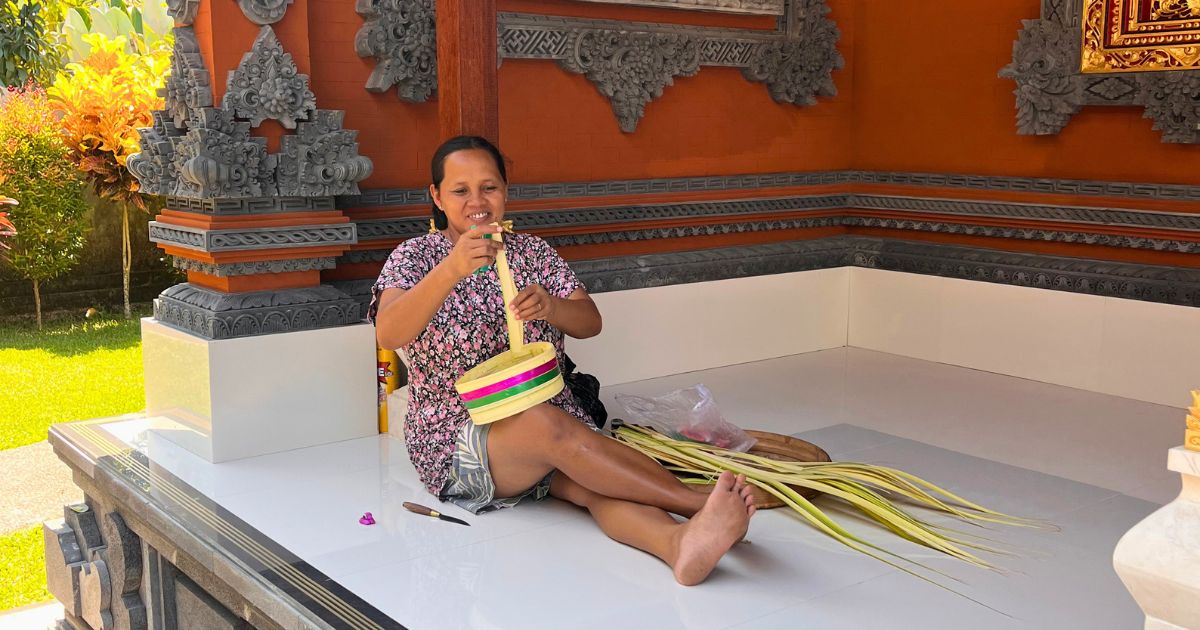
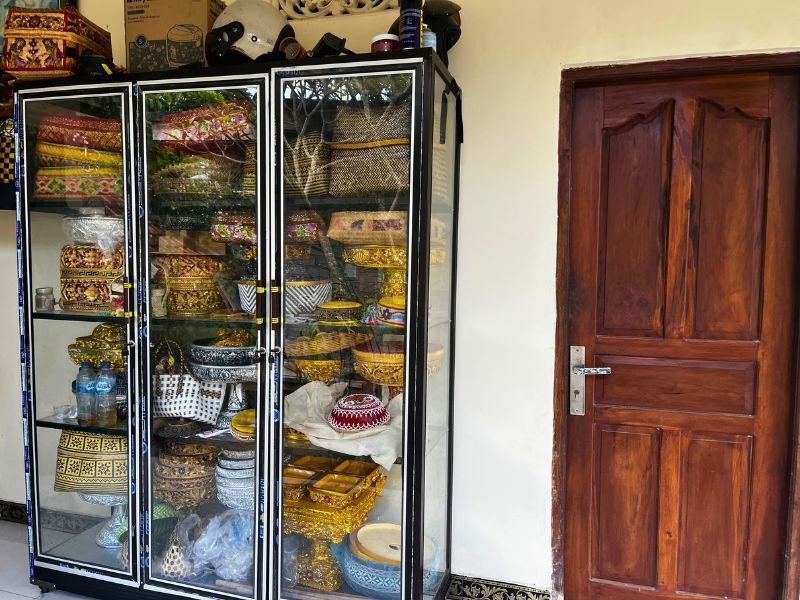
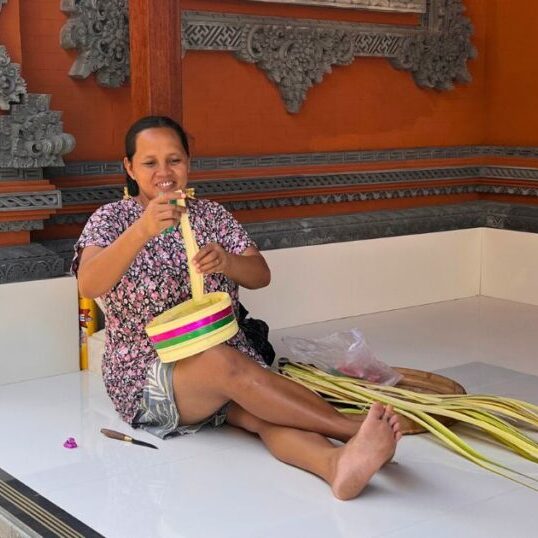
Our host mother sits against the wall of the open-air living space in the middle of the compound. Legs straight on the floor, bamboo and flowers and leaves at the ready, she cuts and staples a different type of offering every morning. A set of several dozen each day that will be placed on the six shrines in the family temple, at the street entrance, in front of each of the three guest units, and in front of each living quarter for the family (elders, young adults, uncle, her and her husband).
She smiles as she works, and clearly takes both pride and comfort in the activity. One day when I comment that she’s finished, she smiles back, “Finished today, more tomorrow, every day.”
All across Bali, women are engaged in this same time-honoured tradition, bringing luck and prosperity to their families. At every house, hotel, restaurant, store, a woman has a tray stacked with banana-leaf plates filled with today’s offerings, gliding between altars and doorways to tenderly place them down and light incense. When a young bride moves into the family compound of her husband, one of her first duties is to learn to make the unique offering style of his village.
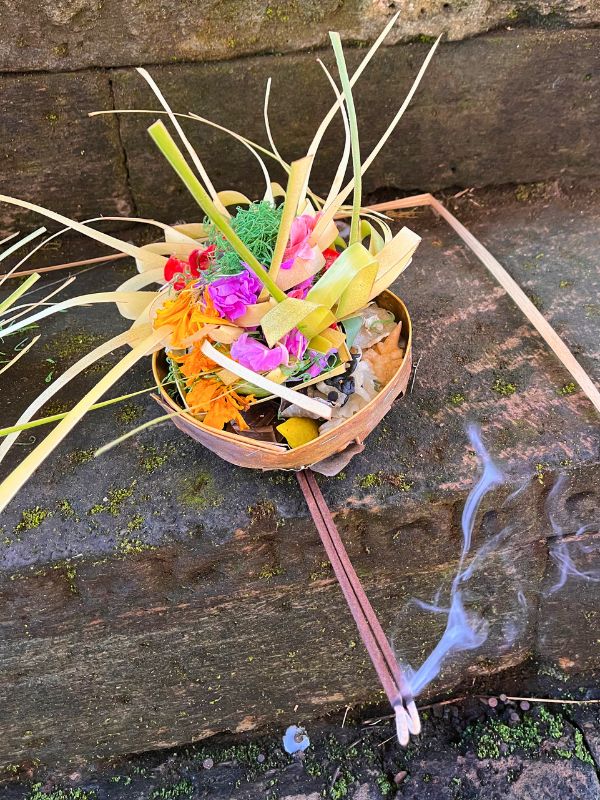
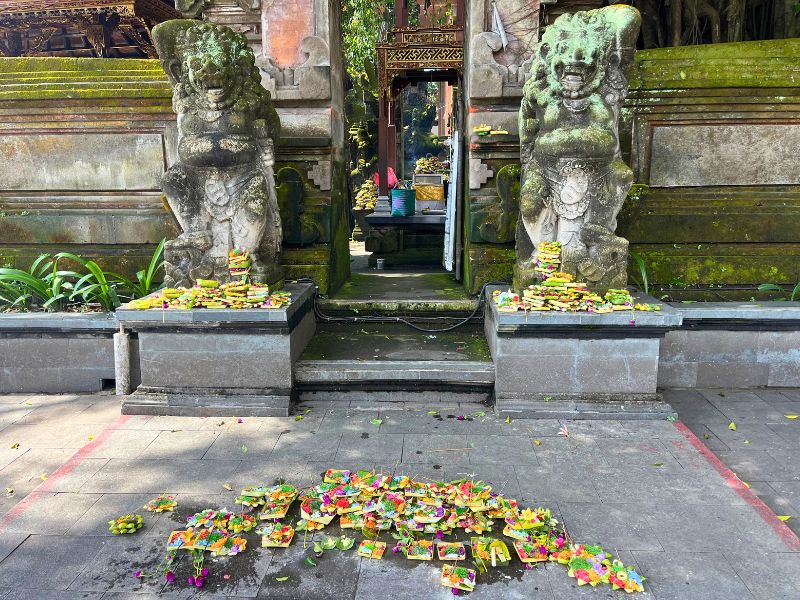
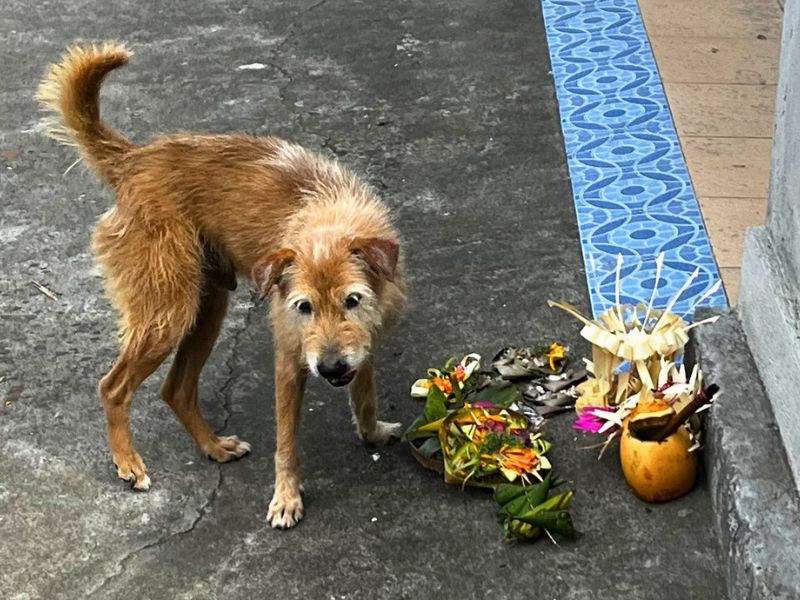
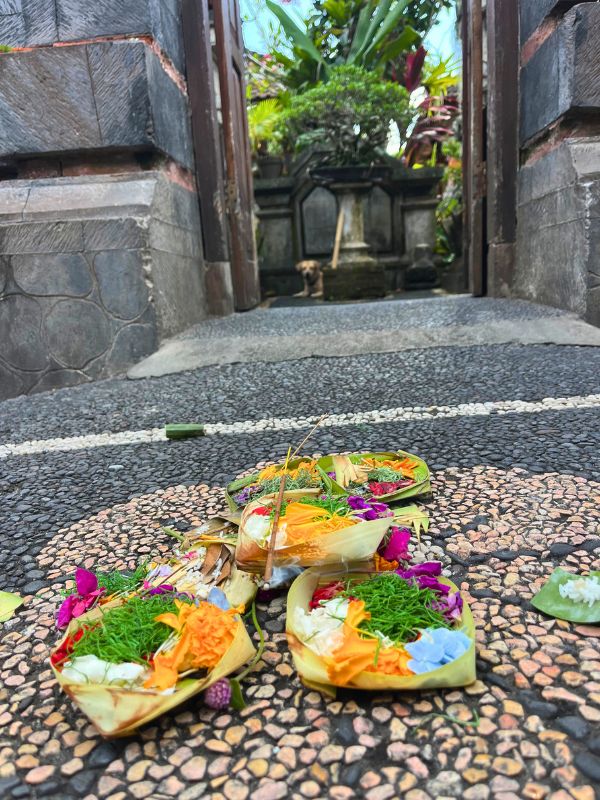
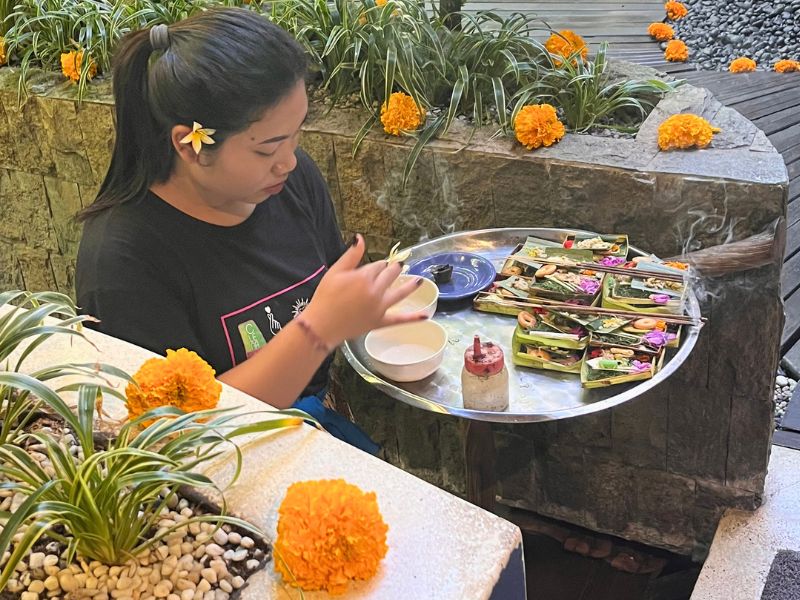
As a guest, it makes me feel incredibly held. This woman cares enough about me to appease the spirits on my behalf. I pay close attention one day and see that she changes the offerings three times, and I know that every time it was done with a genuine desire for my well-being, not a begrudged duty.
Balancing, not Battling, Evil
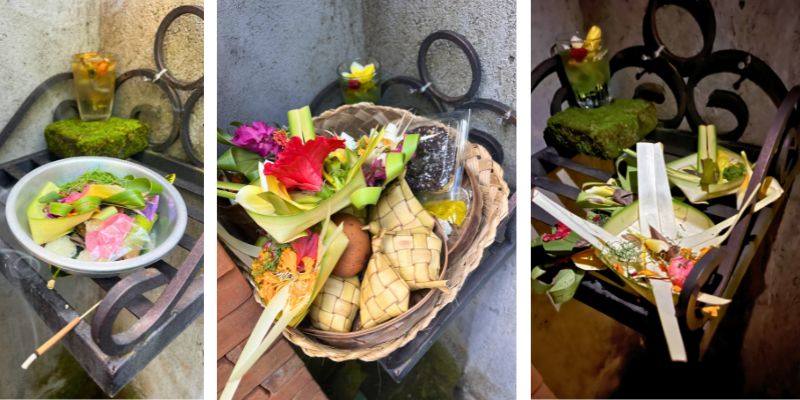
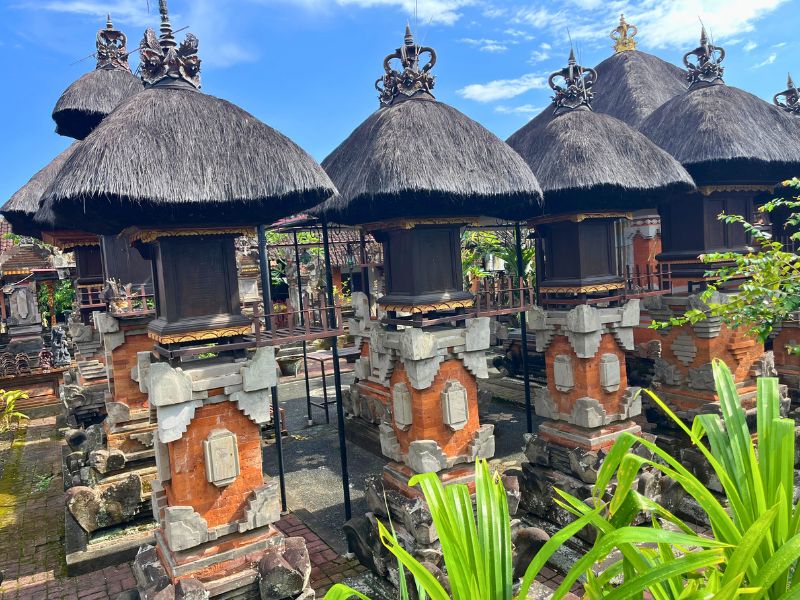
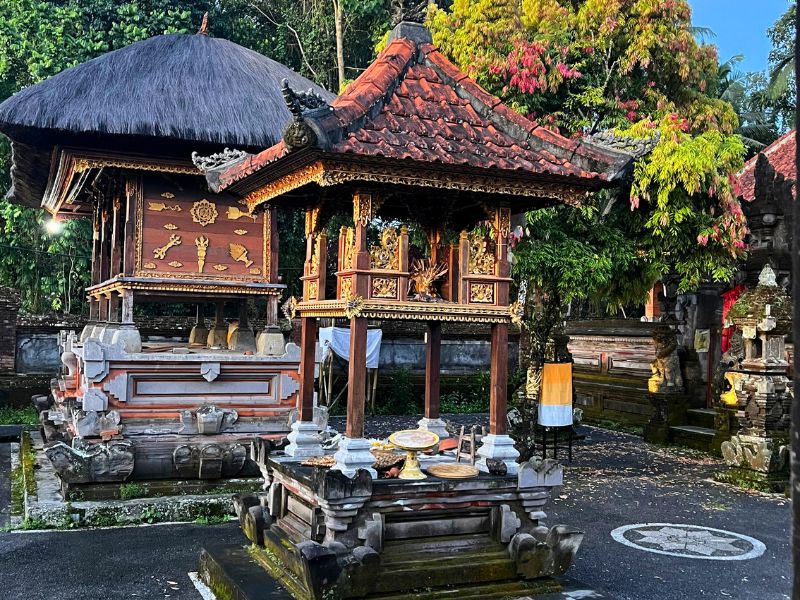
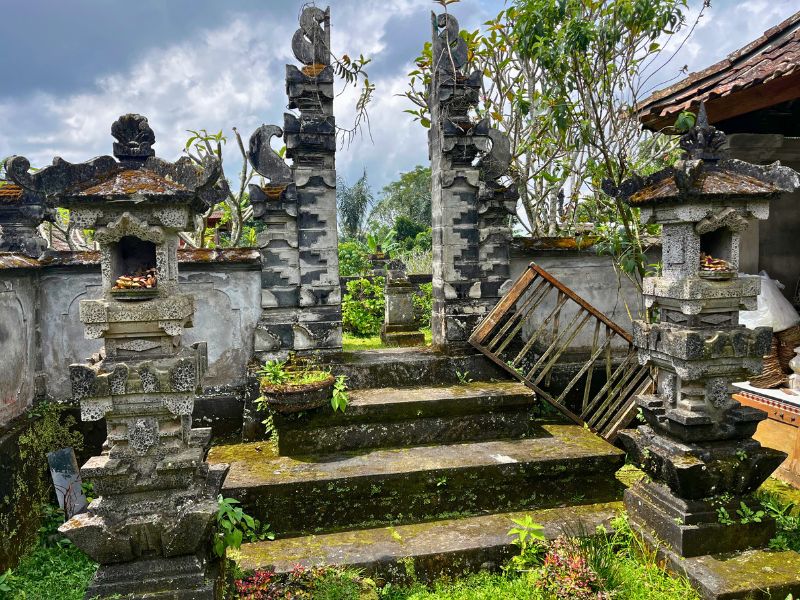
Every house in Bali has a “family temple” - an outdoor walled-off area bigger than their house, with at least six shrines honouring God in his various manifestations (Brahma, Shiva, Vishnu…) The offerings brought for here are good things - holy water, flowers, donuts, incense - to please and honour these good powerful gods in the upper realm.
We humans toil in the middle realm, below which dwell the evil spirits. Offerings have to be put out for them every 15 days - the day with highest energy in the below universe - but in these current times of prosperity most people do it daily. Offerings to the lower spirits include alcohol, rice mixed with strange-smelling substances like ginger or onion (lower spirits like that kind of strong smell) and cigarettes.
“We feed them so they don’t upset balance,” our taxi driver explains. The goal is not to vanquish or banish evil, but to synchronize energies and neutralize negativity. By acknowledging and pacifying evil, balance and harmony between the realms is preserved.
Three Calendars Are Better Than One
The every-15-days offerings to lower spirits are, not surprisingly, guided by the moon phases. The “Saka” lunar calendar is the basis for many religious rites and state holidays. My favourite is Nyepi, the day of silence where everyone stays inside as a symbol of purification, self-reflection, and renewal, and to deceive the evil spirits that the island is uninhabited. “By embracing silence and darkness, the island symbolically appears uninhabited, encouraging negative forces to depart and restoring cosmic balance for the new year.” It falls on the beginning of the lunar year, which is 354 days long (shorter than our 365-day solar year), and seems to also be marked annually by at least one ugly American who insists on their god-given right to go out jogging, probably in a sports bra and loud Hoka’s.
Other ceremonies are guided by the 210-day Paukan calendar. Instead of our weeks (7-day cycles), this calendar has overlapping cycles of 3, 5, 7, and 35 days, each with different day-names and each guiding different aspects of daily life. The 3-day cycle, for example, determines village market days. There is a good day on the calendar for almost every activity from getting your hair cut to getting married, and it serves as a unifying factor that every Balinese person is out doing the same thing on the same day.
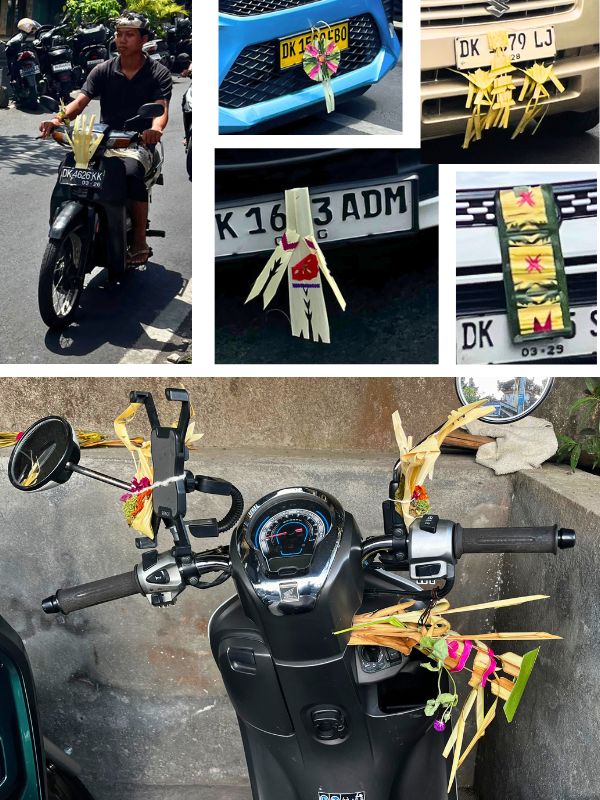
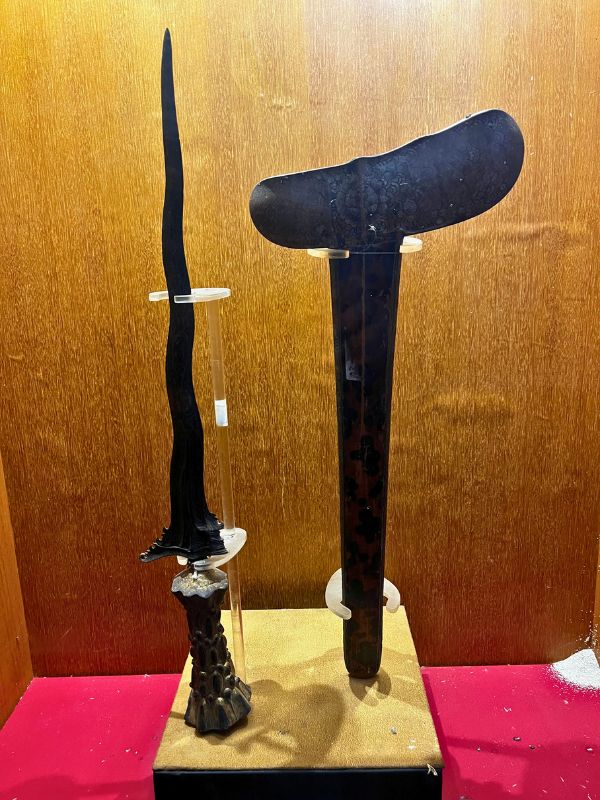
That Paukan calendar also sets days to honour/purify/clean different elements in life. One day a taxi driver helps us notice that many cars had offerings tied to grills/handlebars - this is the day to clean and celebrate all things metal (also including the traditional metal weapons that were used to repel Islamic conquerors - Bali is the only one of the 17,508 Indonesian islands, ⅔ of which are uninhabited, that managed to hang onto their Hindu faith.) Another day is dedicated to books and printed materials - they are cleaned but not read that day. And every village temple has a major ceremony every 210 days.
Last and least romantic, the boring old 365-day Gregorian calendar keeps Bali aligned with the rest of the world. One benefit is double-dipping - birthday celebrations every solar year, and also special birthday offerings every Paukan year.
Held (back?) by Tradition
There’s a rhythm and unity throughout the country that is comforting. Daily rituals and the calendar-based activities absorb a lot of energy and focus, and tie people to each other, their ancestors, and their gods. Boys know they’ll inherit the family wealth and that they’ll always live in the family compound (or start a new one nearby if there’s too many brothers), with the youngest responsible for caring for the aging parents; girls know they’ll go to their husband’s family compound and learn that village’s traditions, and their baby’s feet won’t be allowed to touch the ground for 105 days (until they’ve fully transitioned from the heavenly to the earthly world). Marriages will take place within the family’s caste, on an auspicious date chosen by the priest based on the Paukan calendar.
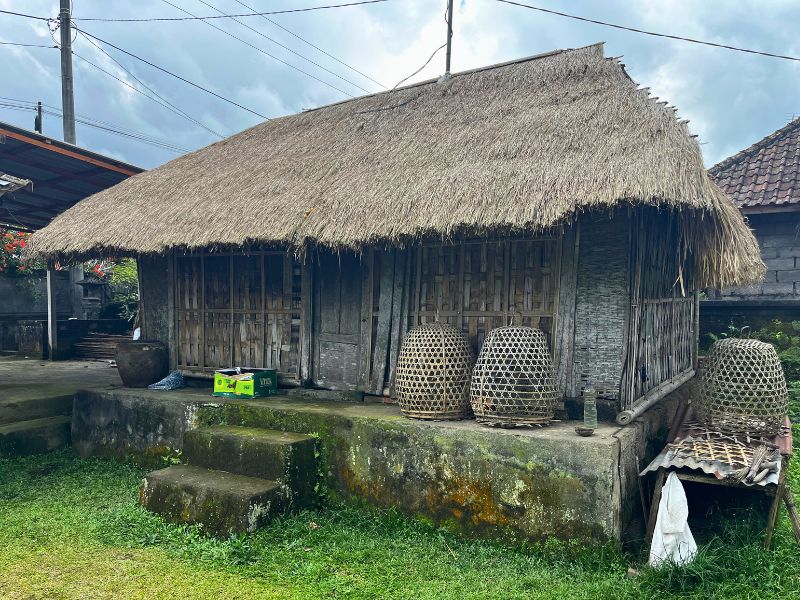
Even their family compound design is standardized. The family temple - with at least 6 shrines to various manifestations of God - in the spiritually-auspicious north-east corner. House for the elders on the North (because that’s usually the high-point of the property - the entire island slopes down to the South like a giant doorstop). Younger family members to the west, animals and utilitarian buildings along the south, and almost in the middle an open air multi-purpose space for body purification rituals, eating, and open-air hanging out in this hot climate.
Afraid of overromanticizing it all, I ask everyone I can if they chafe at the bit. Surely the influence of social media and tourism has planted seeds of discontent? But the consistent answer from the young generation is that they like the way of life, the safety net of family, the surety of their life’s path - all of which is deeply embedded in this faith and ritual. “Our ancestors set up the system, we follow it.” They will not suffer the worries of how to enter a crazy-expensive housing market, the hunger pangs of poverty, the drive to Earn More and reach the top. The one driver who does talk about increased stress still points out that “poverty” - mostly in the regions further from the lucrative tourism industry - means living on slightly less, not hunger or homelessness.
Spare Change
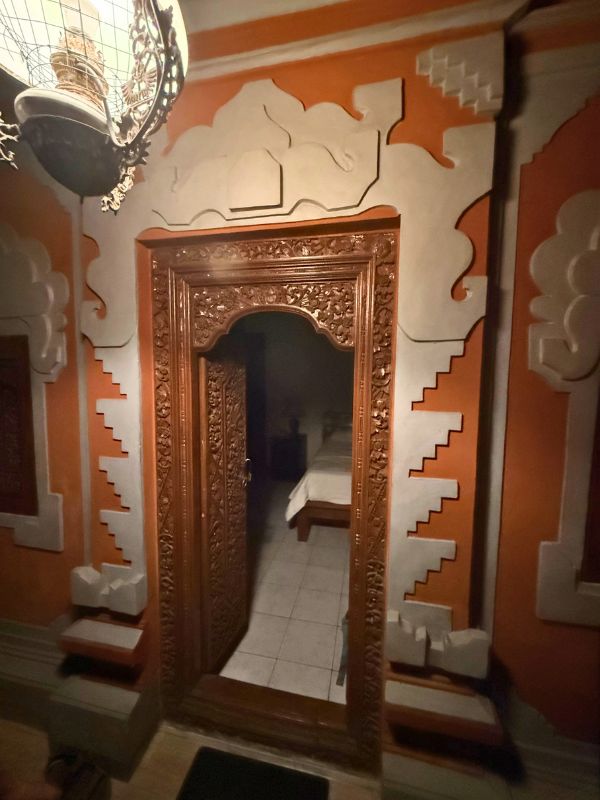
There has been some change, of course. This sleepy spiritual capital Ubud has exploded with hotels and carving-venfors and yoga studios, especially in the wake Julia Roberts’ filming of Eat Pray Love. The wealth from this tourism boom, and from young people going to work in Japan for a few years, has allowed upgrades in the quality of houses (materials and adornment, but not size). Everywhere we walk we see construction and renovation underway.
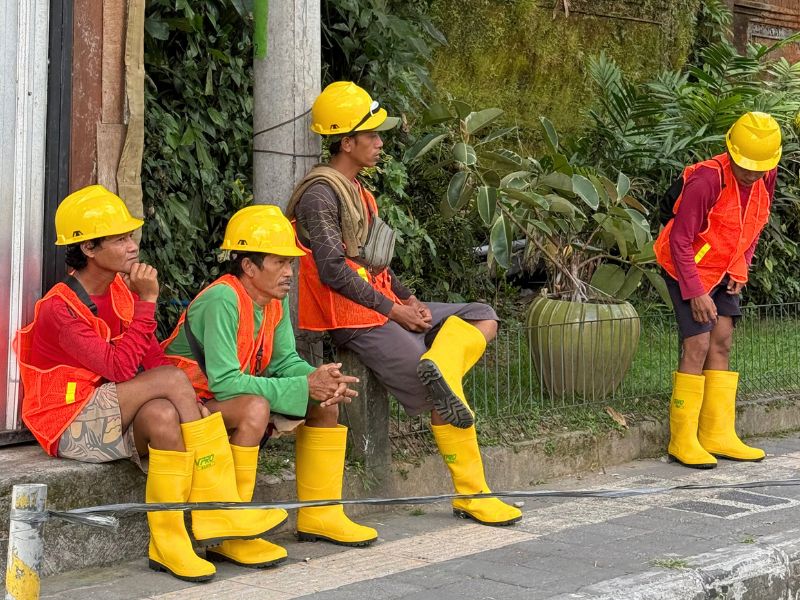
The nature of jobs in tourism doesn’t always jive with spiritual rituals. Employers try to be flexible to allow workers to fulfill their duties, but we tourists aren’t so forgiving. But Balinese cut these young people some slack - maybe on sacred metal day the car can be washed after taking the tourists on their trek instead of in the morning. Some ritual times are streamlined or bent, but never broken.
For the young singles searching for love, dating is still traditional and virginity is still expected. But whereas the eligible pool used to be girls at school or the nearby villages, social media opens up possibilities across the country. It does mean that the bride will have to move much further away from her family after marriage.
We befriend a young woman writing a fiction based on her real-life dilemma of being in love with a man from a much higher caste. She knows his family would never bless their union, and he would risk bringing bad luck on the whole family. I’m very interested to see how the heroine resolves this conflict between heart and tradition, both on the pages and in real life.
She speaks of her situation like a sad conundrum, but not an outrage or injustice. Her brother has the difficulty of having been identified as the one to replace his father as village Priest, but he doesn’t deeply feel called to ministry. But to decline would bring great misfortune to the family and the whole village. The younger brother might be a better fit, but he wasn’t the one chosen - and anyways, when the elders found out he shared a birthday with his older brother they counselled about how inauspicious that is, so he had to move out and be raised by his Uncle so that spiritually they are cousins with the same birthday, not brothers.
Living in a Prayer
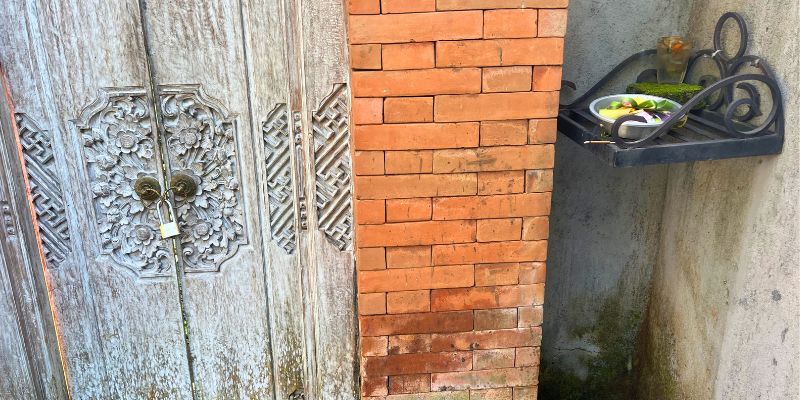
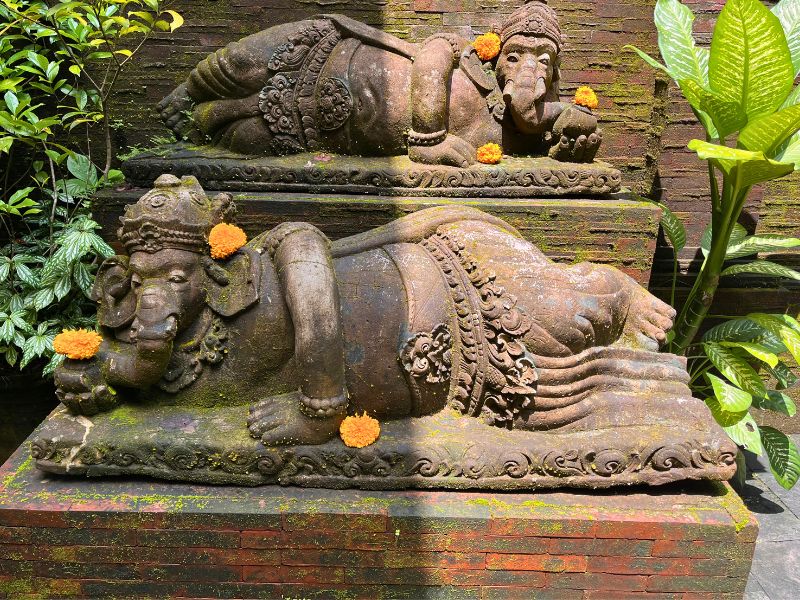
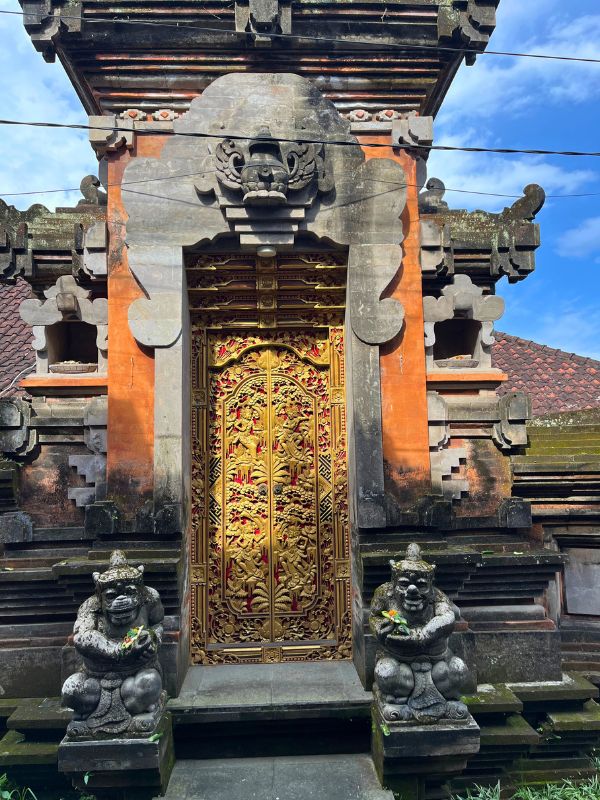
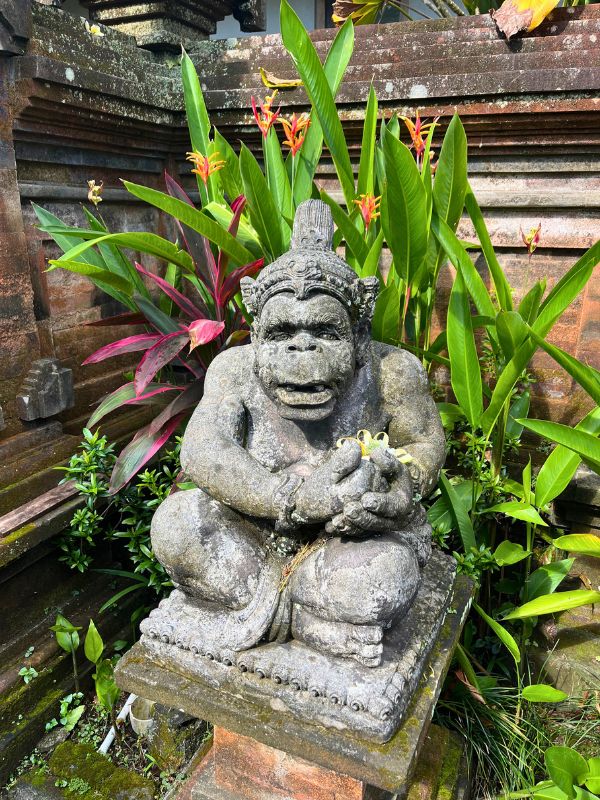
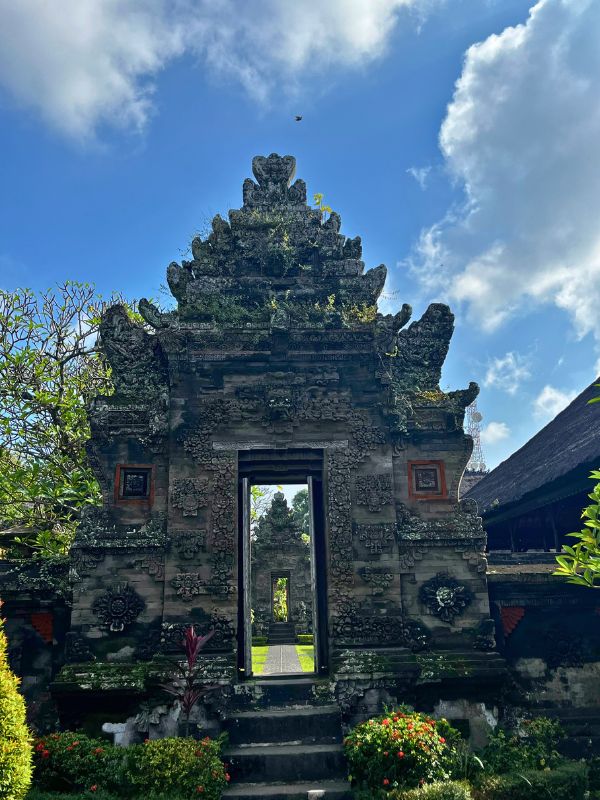
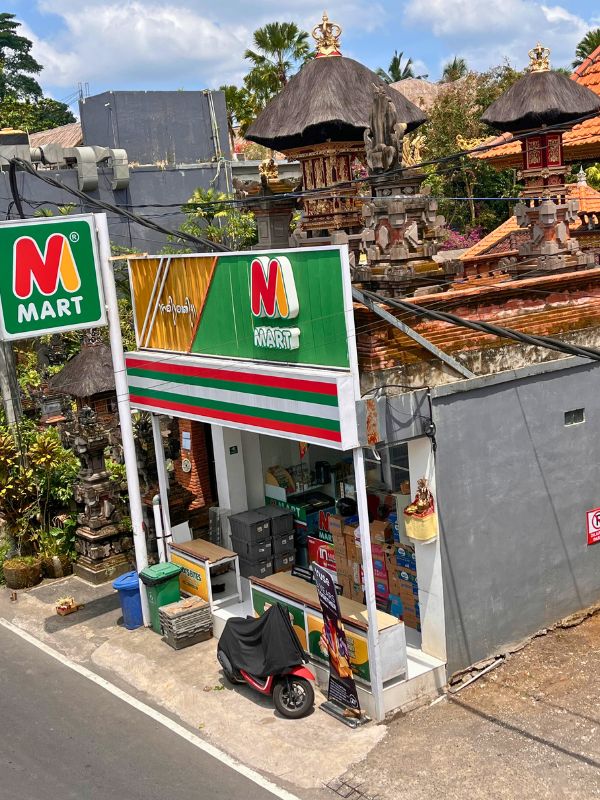
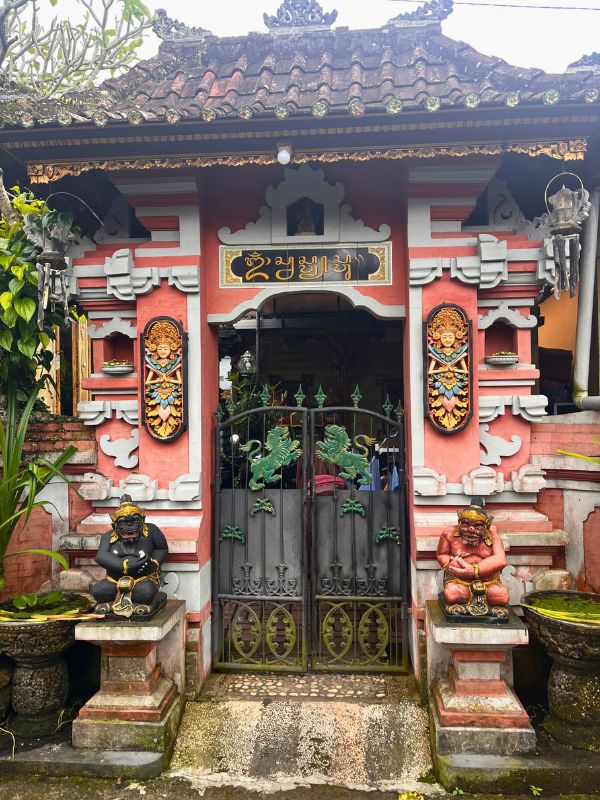
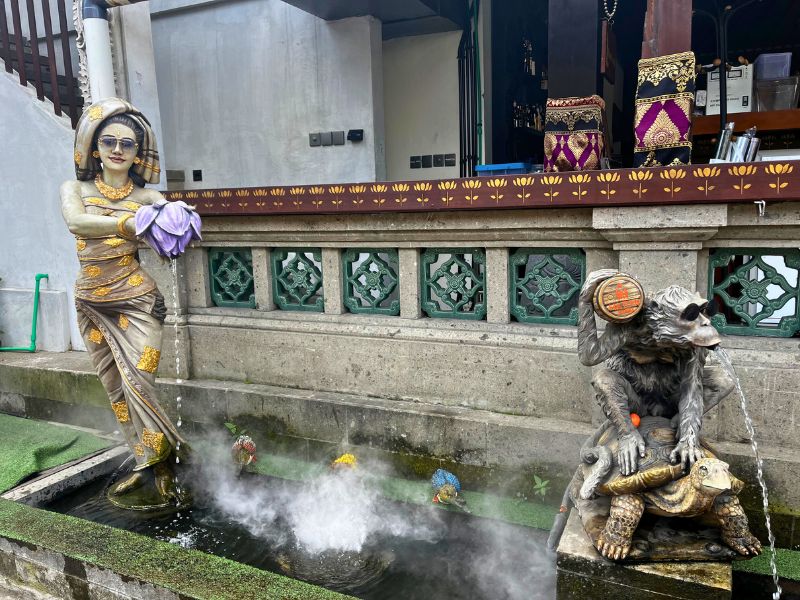
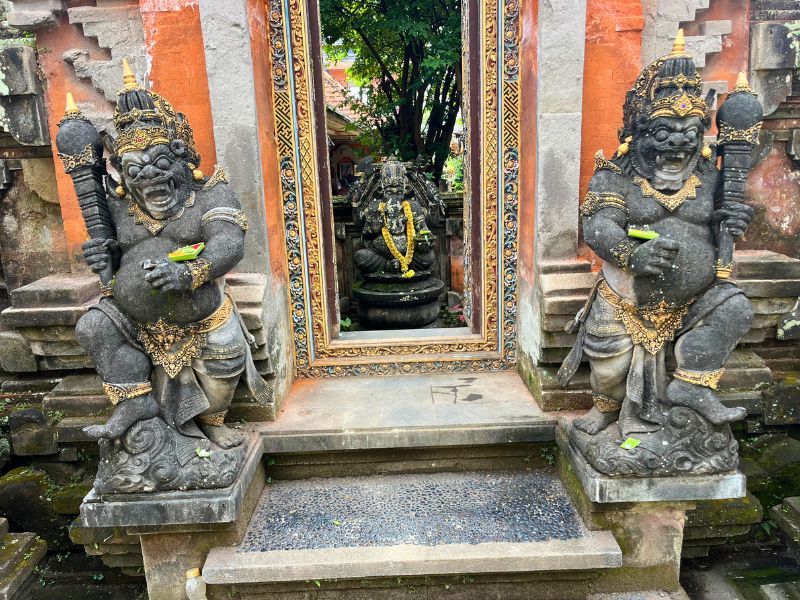
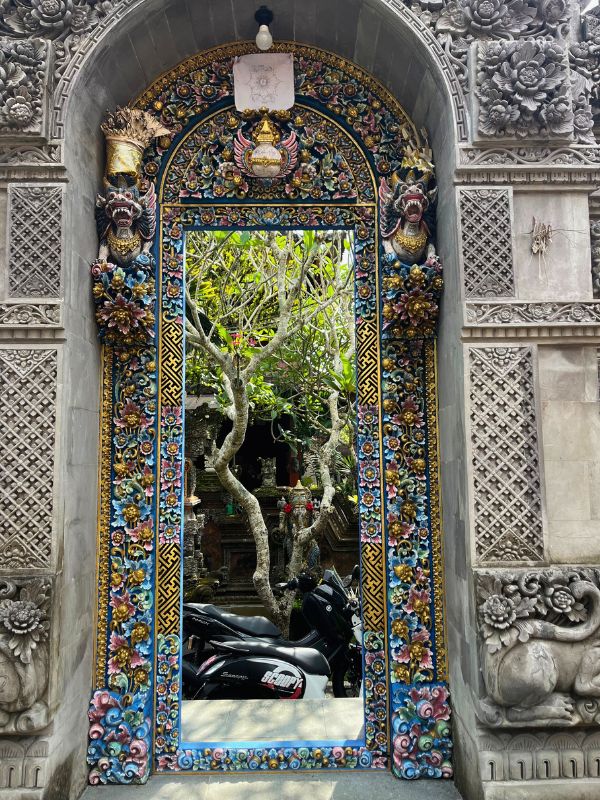
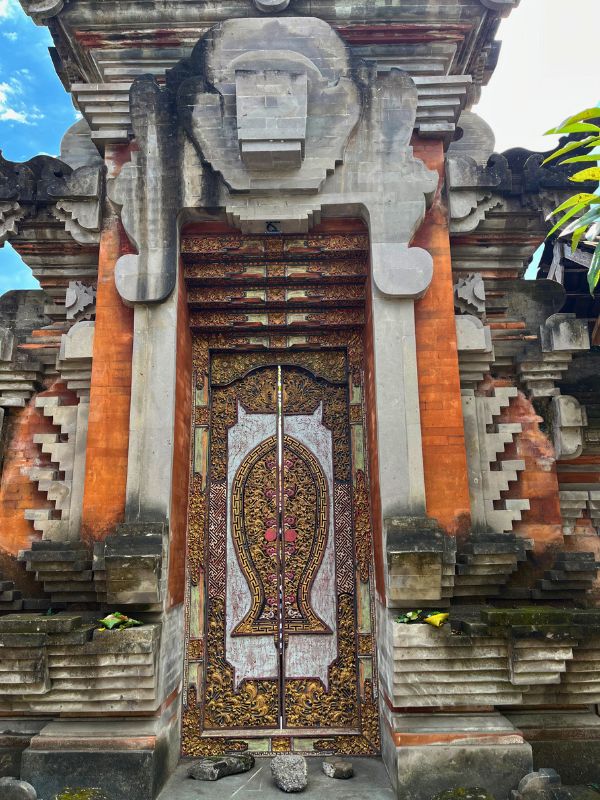
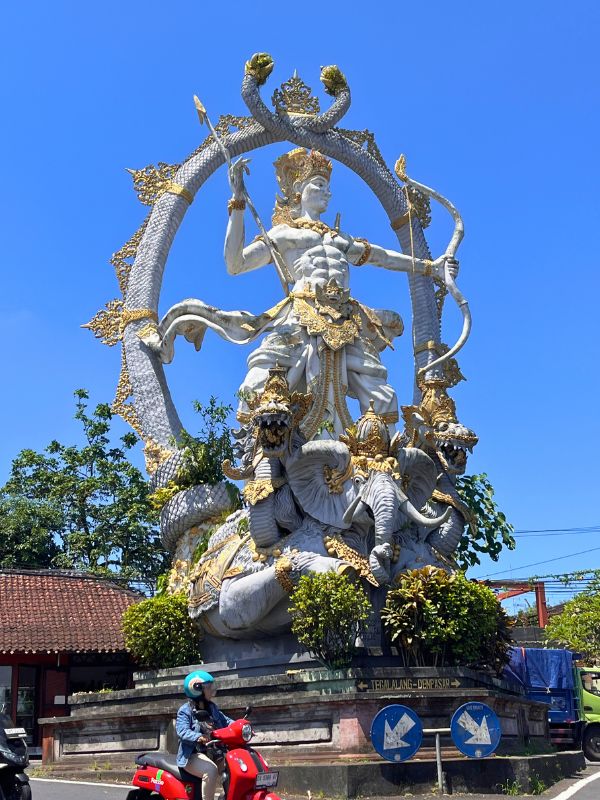
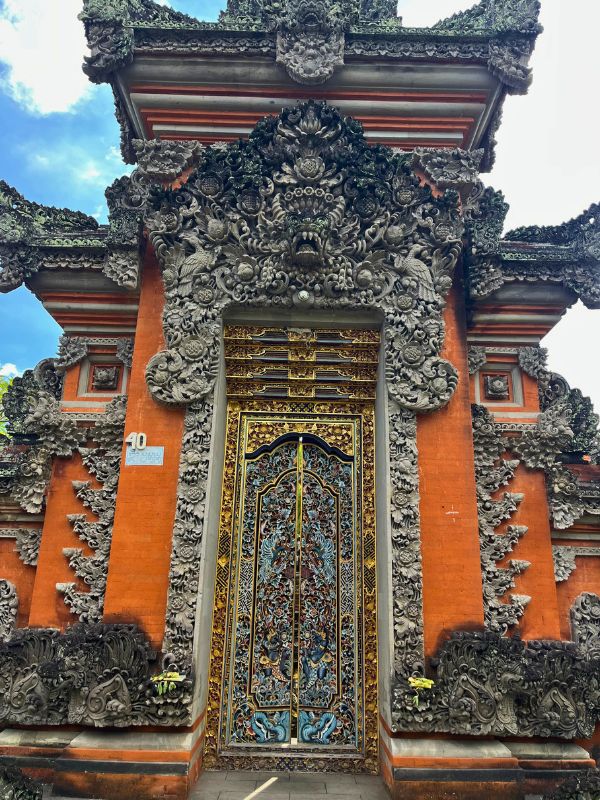
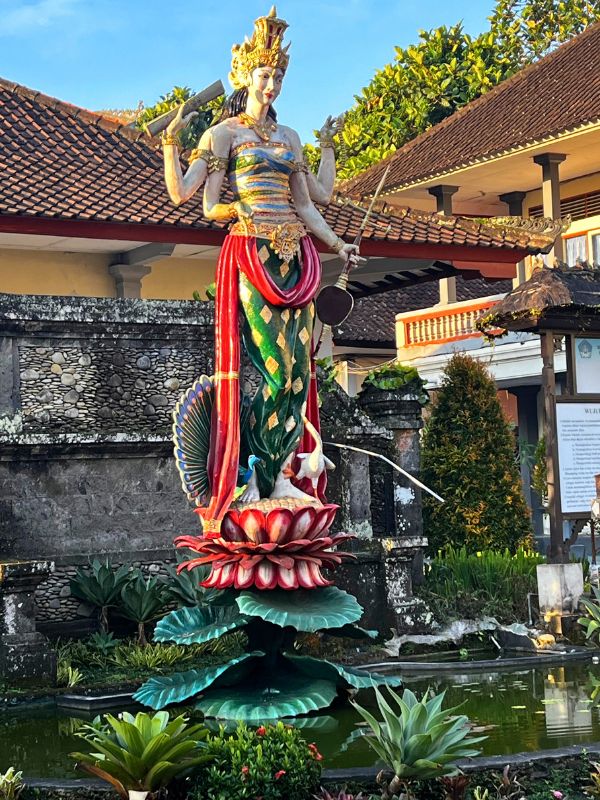
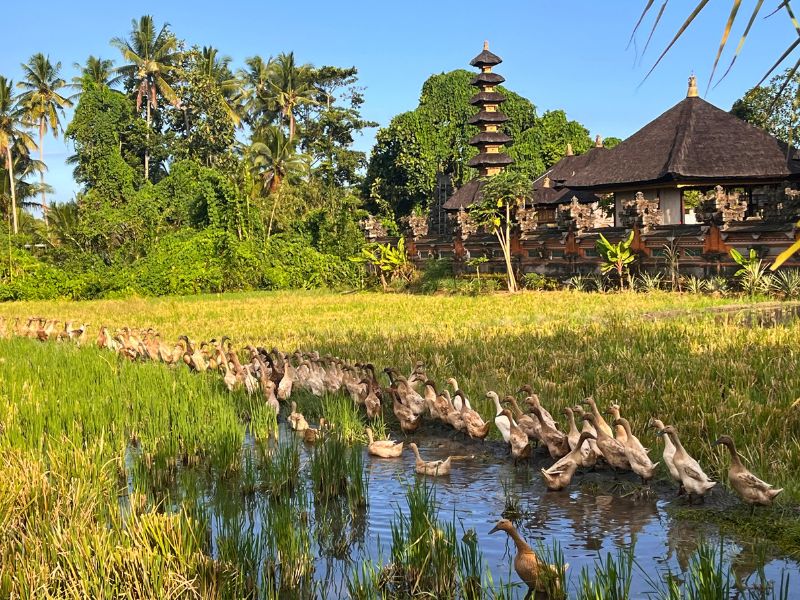
Being in Bali feels like living inside an ancient temple. Every village is required to have at least three village temples (for Shiva, Brahma, Vishnu), and every home has a family temple. Plus the statues to ward off evil spirits at every beautifully-ordained family compound gate. It all adds up to an estimated 20,000 temples - or nine per square mile. But really what it means is that there’s nowhere that doesn’t have a shrine, statue, carving, offering, incense burning. Everywhere you look there is reverence and beauty. (Unless otherwise noted, all the photos below are from ordinary private houses on ordinary streets.)
People who live in a country-wide temple and devote so much energy every day to offerings and ritual can’t help but be grounded and gentle. Drivers are slow and let other cars in. Laughs and smiles are plentiful, and greetings feel genuine. “Om swasiastu” with hands in prayer position, slight bow and bright smile.
Under this sweet spiritual anesthesia I’ve developed a bit of Bali brain, completely unclear on what day of the week it is and missing online meetings. But it’s more of a peaceful glow, with nothing feeling urgent or too big or too important. We are one, being cared for and prayed for, held by the universe and each other. This is how community, and life, are meant to feel.
Subscribe now to get an email notification when a new post is published.
(Be sure to check your inbox to confirm your subscription.)
1 Comment
Leave a Comment















Currently in...
France (Amiens, Mer Les Bains) for Sarah's knee replacement
Heading to...
New Brunswick, Newfoundland, Uruguay, Chile, Monteverde. Please share any sites, people or ideas by email.
Thresholds must be special the carvings are so carefully done. I appreciated the story about the offerings thanks brightened my day